★ For parents of 8-year-olds

Chores for 8-year-olds: when paid chores begin.

Chores for 8-year-olds work best as a mostly-unpaid baseline with one or two paid extras layered on top. Here's which to pay for, and how much.

Sprout Saver Team · 7 min read
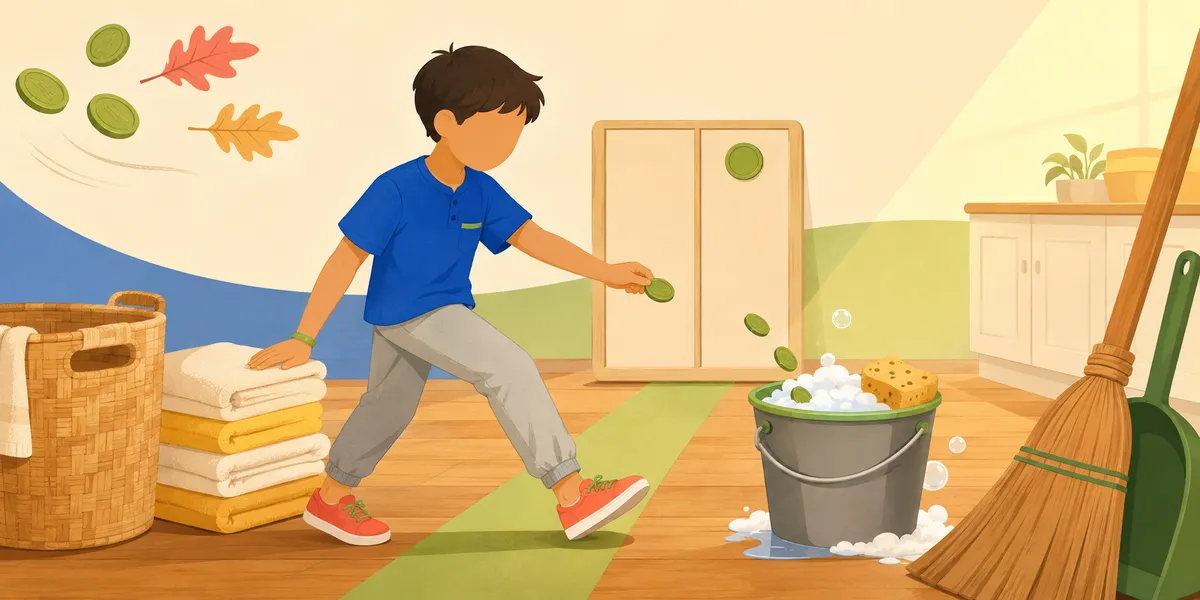
An 8-year-old holding a coin, mid-step from an unpaid chore to a paid one. Chores for 8-year-olds: the first paid chore.
In this guide

★ Key takeaways

  • Chores for 8-year-olds work best as a mostly-unpaid baseline with one or two paid extras layered on top. Eight is the bridge year when the first paid chore makes sense.
  • Keep the everyday chores (bed, table, hamper, pet) unpaid. Those stay family contributions.
  • Pay $1 to $3 for one or two above-baseline jobs like washing the car or raking leaves. Cap a single chore low.
  • Pay on completion, then split what they earned into Save, Spend, and Give.
Chores for 8-year-olds are the first ones you actually have to make a decision about, because eight is the bridge year. At six, the answer was simple: a short list of unpaid jobs, and the money lived on its own track. By eight, the daily-chore habit is usually steady, your kid can hold a one-week timeline in their head, and the question every parent eventually faces shows up for real. Do you start paying? The honest answer is yes, a little, and only for the right chores. This post is about exactly which ones, how much, and how to add the first paid chore without turning the whole house into paid work.

What an 8 year old can do and the first chore to pay for

By eight, the everyday baseline is well within reach, and a couple of bigger jobs become possible for the first time. Here's the shape of it.

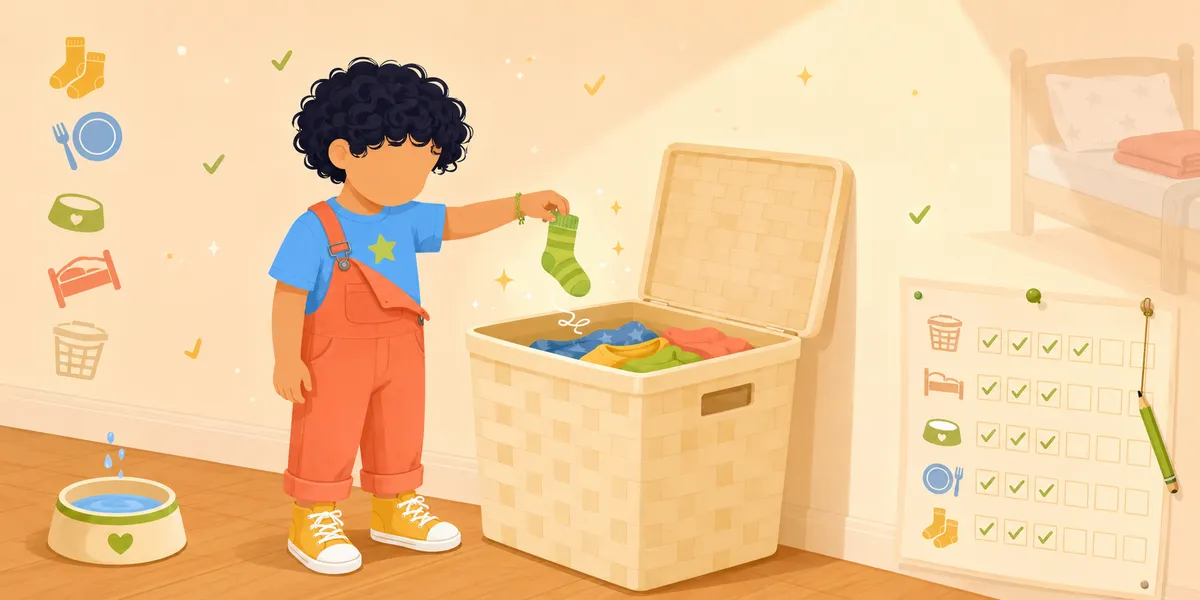
  1. The unpaid baseline. Make the bed, set and clear the table, dirty clothes in the hamper, feed the pet, pack their own lunch, tidy their room. Still part of just living here.
  2. The first paid extras. Washing the car with you, raking leaves, vacuuming a room. Genuinely above the baseline, and the natural home for the first paid chore.
  3. The amount. One to three dollars per paid chore, capped low. Small on purpose.
  4. The split. Whatever they earn gets divided into Save, Spend, and Give, so the money becomes a habit instead of a one-off.
1–2paid

Paid extras at eight

Layered on top of the unpaid baseline, not instead of it.

$1–$3/chore

Per paid chore

Small on purpose. The habit matters more than the wage.

The reason eight is the right year to start, and not six, is mostly about timing. The Consumer Financial Protection Bureau's Building Blocks model identifies middle childhood, roughly ages six to twelve, as the stretch when financial habits and norms take hold: the everyday routines and attitudes about money that later decisions get built on. At six those habits are still forming. By eight they're usually steady enough that "do the job, then get paid for it" actually lands as a connected sequence rather than a confusing one. If you started a small allowance at six, as we suggested in our post on chores for 6-year-olds, this is the year the chore side of the money picture catches up to it.

At eight, the baseline still isn't for sale. You're just adding the first job that is.

Family baseline vs the first paid chore

The whole system at eight rests on one distinction, so it's worth making it concrete before anything else.

Family baseline

The chores that come with living here. Bed, table, hamper, pet. Still unpaid at eight.

First paid extras

One or two above-baseline jobs that now carry a small amount. Washing the car, raking leaves.

Allowance

The weekly money, still arriving on its own schedule, independent of any single chore.

The baseline is everything your kid does because they live in the house. It doesn't carry money, and that's the point. Paying for the bed or the hamper quietly reframes belonging to the household as a transaction, and it's surprisingly hard to walk that back later. The paid extras are different in kind, not just in size. They're the jobs you could plausibly hire out: a car wash, a yard cleanup, a deep vacuum. Attaching a small amount to one or two of those teaches the earning-to-effort connection without putting a price tag on being part of the family. Money As You Grow's guidance for this age is built around exactly this kind of small, concrete, real-world money experience.

The widget below is the decision in miniature. Every chore an eight-year-old can handle starts in one of two lanes, and you move the one or two you want to start paying for across the divider. Watch the weekly total, and watch the nudge when you tip past two paid chores. Most families land near one or two paid extras and a baseline that stays comfortably unpaid.

★ Interactive · 45 seconds

Which chore becomes the first paid one?

When to start paying an 8 year old for chores

This is the question that brings most parents to a post like this, and it's a completely reasonable one to be unsure about. Your friends are split, the parenting internet is split, and you mostly want to get the first move right so you're not undoing it in a year. Here's the approach that holds up, in four steps.

Keep the baseline unpaid. Leave the everyday chores that come with living in the house, the bed, the table, the hamper, feeding the pet, completely unpaid. These stay family contributions, and not paying for them is what keeps the whole system stable later.

Pick one or two above-baseline jobs. Choose one or two bigger, genuinely optional jobs to attach money to, like washing the car, raking leaves, or vacuuming a room. One or two is the sweet spot at eight. More than that, and the baseline starts to feel like it needs a price tag too.

Set a small per-chore amount. Pay one to three dollars per paid chore, scaled to effort, and cap a single chore low. The lesson at eight is the habit of earning, not the size of the wage, so keep the numbers small and the rhythm weekly.

Pay on completion, then split it. Pay only once the work is actually done to the standard you agreed on, then split what they earned into Save, Spend, and Give so the money turns into a habit instead of a one-off. In Sprout Saver, the Chore Management flow handles this: your kid marks the job complete with an optional photo, you approve it, and the small amount lands in their balance ready to be sorted into the three jars. The photo at eight is mostly a way to make "done" concrete and the payout a small celebration, not a strict audit.

Lessons that teach earning at eight

If you'd like some outside help with the earning conversation, four lessons in the Sprout Saver catalog are pitched right at this age. Each one picks up a different piece of the same loop: agreeing on a job, earning the money, then deciding what happens to it.

If you'd rather just move your existing chore chart into the app, the Chore Management feature keeps the two lanes separate for you: baseline tasks your kid checks off, and paid extras that run through approval before the money lands. For the wider view of what comes next in the seven-to-nine band and beyond, our pillar guide on chore ideas by age lays out the full progression.

When the chore gets skipped or done badly

Two things will happen in the first month, and neither one means the system is broken.

The first is a skipped baseline chore. The fix here is structural, not a lecture. The baseline isn't for sale and it isn't optional, so the consequence is simply that the paid extras don't open up until the baseline is handled. No made bed, no paid car wash to negotiate that afternoon. Holding that line calmly for a week or two is usually all it takes.

The second is a paid chore done at about sixty percent. This one is actually the more useful lesson, because it's where "done" gets a definition. Pay on the standard you agreed to, not on effort or good intentions. If the car still has a muddy stripe down one side, the job isn't finished, and the money waits until it is. Said warmly and without drama, this teaches more about quality of work than any amount of reminding. Most kids only need to experience the held-back payout once. The money is a far clearer teacher here than your voice, and it spares you the nagging. If the money side of the week keeps drifting, it's often the allowance structure rather than the chores that needs a tune-up. Our allowance guide for 8-year-olds covers how the weekly amount should sit alongside all of this.

Things parents ask us about chores at eight

By eight, most kids can run the full everyday baseline on their own: making the bed, setting and clearing the table, the hamper, feeding the pet, packing their own lunch, and tidying their room. They can also start handling the bigger jobs a six-year-old usually can't yet, like vacuuming a room, wiping the bathroom sink, washing the car with you, and raking leaves. Those bigger ones are exactly where the first paid chores tend to come from.

Ready?

The year the first paid chore shows up.

Sprout Saver keeps the unpaid baseline and the paid extras on separate tracks. Assign the chore, approve the work, and the few dollars they earn drop into Save, Spend, or Give automatically.

Get Started Free

More to read