In this guide
★ Key takeaways
- How to explain opportunity cost to kids: name the next best thing they gave up, not just the price they paid.
- The concrete trade-off lands at six to eight, the word itself clicks around nine or ten, and the time-and-money version lands at thirteen to sixteen.
- The cleanest definition for a kid: opportunity cost is the best thing you could have done with the same money or time, but didn't.
- Make it visible. A jar split or a named goal turns an invisible trade-off into something a kid can actually watch.
How to explain opportunity cost to kids comes down to one small shift: instead of talking about what a thing costs, talk about what they gave up to get it. The price tag says five dollars. The opportunity cost says "the book you also wanted." Same purchase, completely different lesson, and the second one is the one that sticks. The Consumer Financial Protection Bureau's Money As You Grow program lists recognizing trade-offs as one of the earliest money skills a child builds, which means you can start this far younger than the intimidating term suggests.
The trick is matching the version to the age. At six it is two toys and one choice. At ten it is the word itself, finally attached to a feeling they already know. At fifteen it stretches to cover time, not just money. Same idea, three resolutions, and this post walks through all three with the exact words to use.
What opportunity cost actually means to a kid
Strip away the economics-class definition and opportunity cost is just five moves you can make at the kitchen table or the store shelf.
- Start with a real choice they are already making. Two things they want, one budget. The lesson needs stakes, even tiny ones.
- Name the runner-up out loud. The single thing they would have picked next if this one were gone.
- Call that the cost. Not the price, and not everything they didn't buy. Just the one thing given up.
- Show it, do not just say it. Put the other toy back on the shelf together. Watch the jar drop. Make the giving-up visible.
- Let them feel a small one. A little regret over a five-dollar choice teaches more than any explanation, and it costs almost nothing to recover from.
The next best thing
Cost is the runner-up you gave up
When the word clicks
Concept earlier, vocabulary at nine or ten
Notice what is missing from that list: the word "opportunity cost." You do not need it to teach the idea, and for younger kids the term gets in the way. What matters is that they connect the thing they chose to the thing they let go. The Money As You Grow milestones frame this as recognizing trade-offs across the things a child cares about, which the milestones list as time, money, treats, and belongings. Once a kid can name the runner-up, the vocabulary can come later and it will have something real to attach to.
Opportunity cost is not the price on the tag. It is the next best thing your kid could have done with the same ten dollars.
When opportunity cost clicks, by age
The question we hear most is some version of "is my kid old enough for this," and it is a fair one, because the answer is genuinely yes-and-no. The concept is available early. The word and the abstract reasoning behind it arrive later. Here is what each version looks like in practice.
At six, the trade-off you can hold
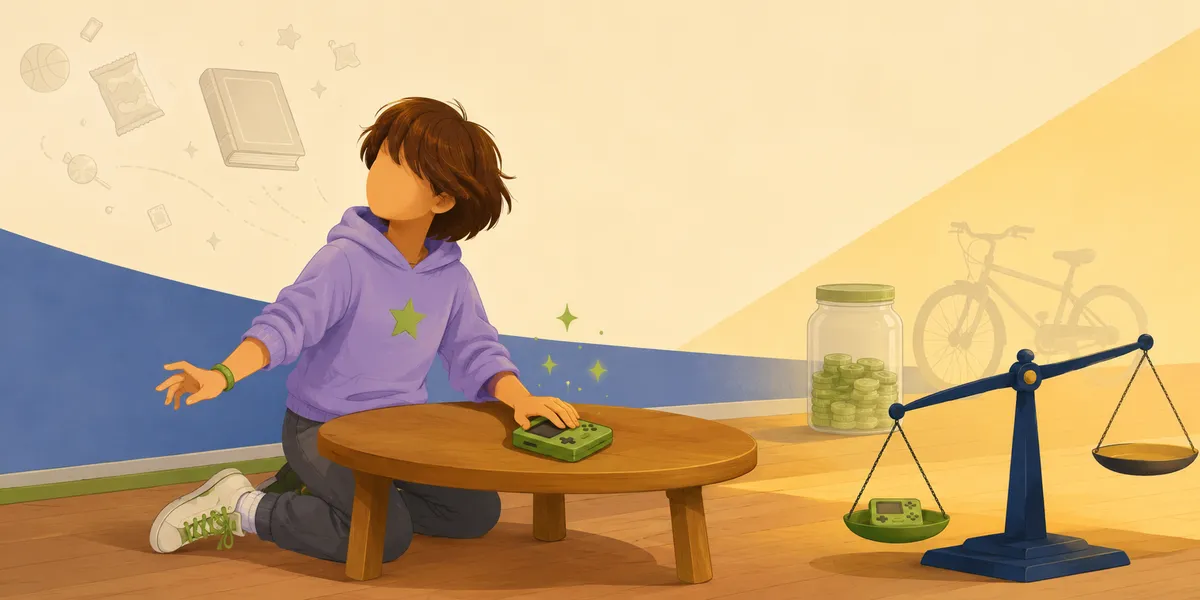
Two candies, one toy. Pick one, point at the other. That other thing is the cost. No vocabulary needed yet, just the choice made real.
At ten, the word that fits the feeling
Spend ten dollars now, or wait for the eighty-dollar thing. Old enough to hold both options in mind and name the one they gave up.
At fifteen, the cost that includes time
A weekend shift earns money but costs the study time or social time it replaces. Opportunity cost now stretches to cover time and future goals.
At six to eight, keep it physical and immediate. Two candies, one toy, a single dollar. The child picks, and you point at the thing they set down. They will not say "opportunity cost," but they will feel it, and feeling it is the foundation everything else is built on. Around nine or ten, the word starts to fit. This is the age most parents have in mind when they search for help with this topic, and it is the right instinct, because a preteen can finally hold two options in mind at once and reason about the one they passed up. By thirteen to sixteen, the cost expands past money into time: a weekend shift is fun money earned and study hours spent.
It is worth being honest about the research here, because this topic sits next to the famous "marshmallow test." The American Psychological Association's look back at that work makes the careful point that self-control is "eminently teachable, particularly early in life." That part holds up. The splashier claim, that one preschool choice predicts a kid's whole future, has been walked back by later replication studies, so it is not something to repeat to a worried parent. Teach the skill early because the skill is teachable, not because a single test forecasts adulthood.
Opportunity cost examples for kids
The fastest way to make this land is a concrete analogy the child can picture. A few that work, sorted by the age they fit best:
- Two candies, one toy (ages 6 to 8). The most basic either-or. Whatever they set down is the cost of whatever they pick up.
- The "this or that" game (ages 6 to 10). Rapid pairs: playground or cookies, soccer ball or art set when only one fits in the bag. Then ask, every time, "what did you give up?" It works for time as easily as money.
- Ten dollars now or the eighty-dollar bike (ages 9 to 12). Spending small today means the big goal stays just as far away. This is where saving becomes visibly a choice, not a chore. Our needs-versus-wants playbook pairs well here, because sorting needs from wants is the step right before weighing one want against another.
- The weekend shift (ages 13 to 16). A four-hour shift is real money and four hours not spent studying, training, or with friends. Naming the time cost out loud is what turns a teen from "I'll just pick up more hours" into someone who actually weighs it.
Make the trade-off visible
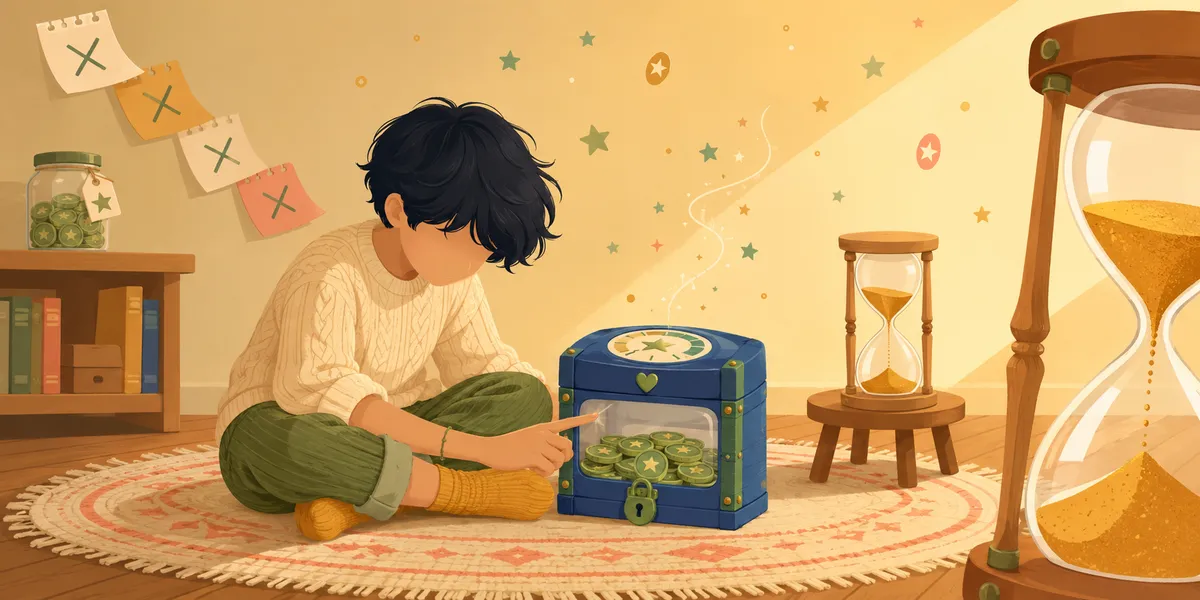
The reason this lesson stalls is almost never that a kid can't grasp it. It is that the trade-off is invisible. Money leaves a wallet and the thing not chosen simply never existed, so there is nothing to point at later. The fix is to give the choice a physical home. A Save, Spend, and Give jar setup does exactly this: a dollar dropped in Spend is a dollar visibly not in Save, and the kid can see the level of one drop as the other rises. The trade-off stops being a lecture and becomes a thing on the shelf.
The chooser below makes the same point on screen. Pick an age, spend a small budget, and watch it name the one thing you gave up. Saving the leftover toward a goal shows up as its own choice, with its own payoff.
★ Interactive · 30 seconds
What did you give up?
A named savings goal does the same work over a longer horizon. When a kid sets a target and watches a progress bar fill, the opportunity cost of an impulse buy becomes concrete: that five dollars was three days closer to the bike. The point is not the specific tool. It is that the thing given up has to be visible, or the lesson evaporates. The teaching-money-by-age guide places this hands-on, make-it-visible approach at the center of the preteen years, and the financial literacy guide walks through the research behind why concrete beats abstract at every age.
The three lessons below teach this same idea inside the app, one per age band. Try them in the demo to see what shows up on your kid's account.
When they regret the choice
Here is the part most guides skip: the lesson works precisely because it sometimes stings. A kid spends the whole five dollars on the thing they wanted most this second, and twenty minutes later they spot the thing they wanted more. That flicker of regret is not a parenting failure. It is the lesson doing its job, and the instinct to swoop in and buy the second thing quietly cancels it.
So when it happens, name the feeling without fixing it. "You really wish you'd gotten the book. Next time you'll remember that." Then let it sit. A few of these small, recoverable misses do more than a hundred reminders to "think about it first."
Two other snags come up often. The first is the kid who wants both and treats the trade-off as unfair rather than real. The honest answer is that it is real for everyone, including you, and that picking is the skill, not a punishment. The second is the kid who freezes, unable to choose at all. For them, shrink the choice. Two options, a short timer, and the reassurance that a small choice is good practice for the bigger ones coming. If you want the longer version of how to hand this kind of patience and self-direction back to the kid, our post on teaching delayed gratification without lecturing covers it in depth.