In this guide
★ Key takeaways
- How to explain microtransactions to kids: a microtransaction is a small in-game purchase, often using virtual currency, that bypasses the game's normal progression. Teach the kid to recognize the shape, not memorize the term.
- There are seven common shapes: currency packs, Battle Passes, direct cosmetics, gacha pulls, time-skips, ad-removal upgrades, and edge-case DLC. The widget below quizzes all seven.
- The literacy goal is pattern recognition. Once a kid can spot the seven shapes, every new game they play teaches them itself.
- Tactics come second. The Roblox and V-Bucks playbooks are the spending-side response; this is the concept-side foundation.
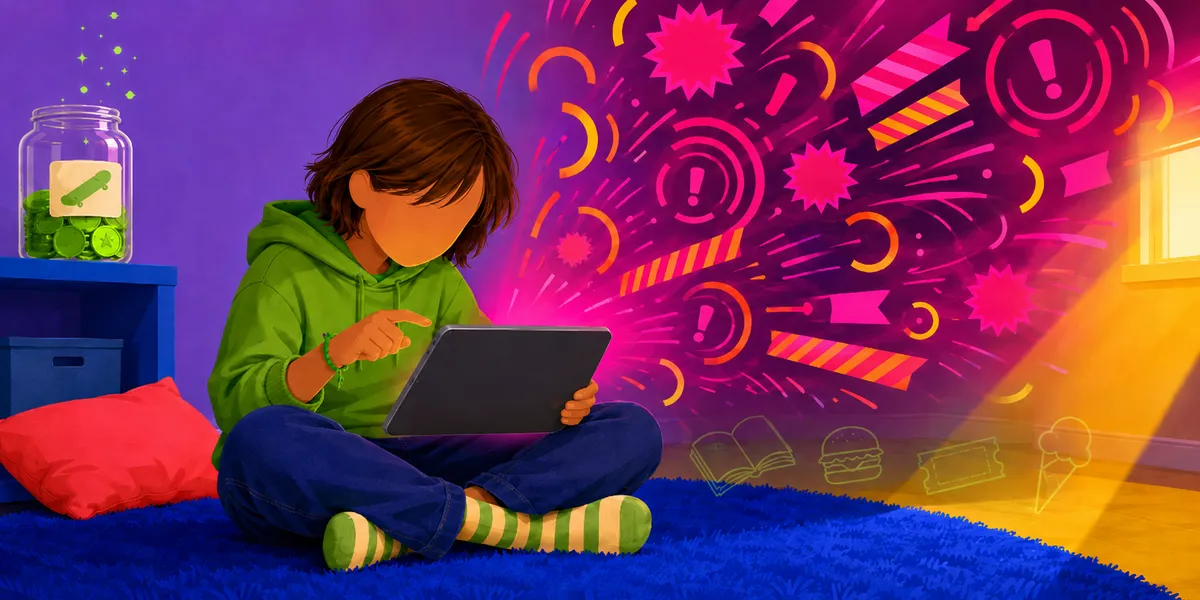
Your kid taps a button in a free game, and a little screen pops up offering a small amount of in-game currency for a small amount of real money. That moment is a microtransaction, and how to explain microtransactions to kids is mostly about giving them a name for what they are already noticing. They feel the pull. They notice the friction is gone. They cannot yet name the pattern, and naming the pattern is the move that turns a vague feeling into a thing the kid can think about.
The good news is that the names sort cleanly. There are seven common shapes a microtransaction takes; once the kid knows the seven, every new game they open teaches them itself. This post is the definition, the seven shapes, and a hands-on exercise the widget below runs with you. Tactics for managing the actual spending live in the two sibling posts (Roblox and Fortnite) and are downstream of the literacy. Without the names, the rules feel arbitrary. With the names, the rules feel obvious.
What a microtransaction actually is
"Microtransaction" is an industry word for something your kid already feels at the in-game store, which is that the game is free, except for the parts that aren't, and those parts are the parts that matter at age nine. The literal definition is small (the "micro"), frequent (the part the term hides), optional in the rhetorical sense (the part the design works around), and inside the game itself rather than on a separate website. The four bullets below are the floor of the concept; the rest of the post is the texture.
- A small in-game purchase. The price is usually between $0.99 and $9.99. The smallness is part of the design; it makes each purchase feel like a rounding error.
- Often through virtual currency. You buy 800 Robux for $9.99; you spend the Robux later. The two-step makes the dollar cost harder to feel.
- Optional, but designed to feel necessary at moments. A skin, a Battle Pass, a pull, a wait-skip. None of them gates the game; all of them are placed where the kid is most likely to feel a pull.
- The recognition is the lesson. A kid who can name the shape stops being susceptible to it in the same way. The concept goes from atmosphere to thing.
Microtransactions take seven forms
Once you can name them, you can spot them
The price range is the giveaway
Small + frequent + optional = the pattern
The kid-level and parent-level versions of the definition are different in tone but the same in shape. The literacy goal sits underneath both.
The kid-level definition
A microtransaction is a small purchase you make inside a game, usually for currency or a cosmetic, that you didn't have to make to keep playing. The 'micro' part is the small price; the 'transaction' part is the purchase.
The parent-level definition
A business model where games are free or cheap at the door and revenue comes from small, frequent, optional in-game purchases. The optionality is doing rhetorical work; in practice the design is calibrated to make the purchases feel necessary at certain moments.
The literacy goal
Not 'avoid all microtransactions.' That is unrealistic, and the better-designed ones are a real value exchange. The goal is recognition: the kid can name what is happening when a new game's store opens, instead of feeling it as a vague pull.
The seven shapes microtransactions take
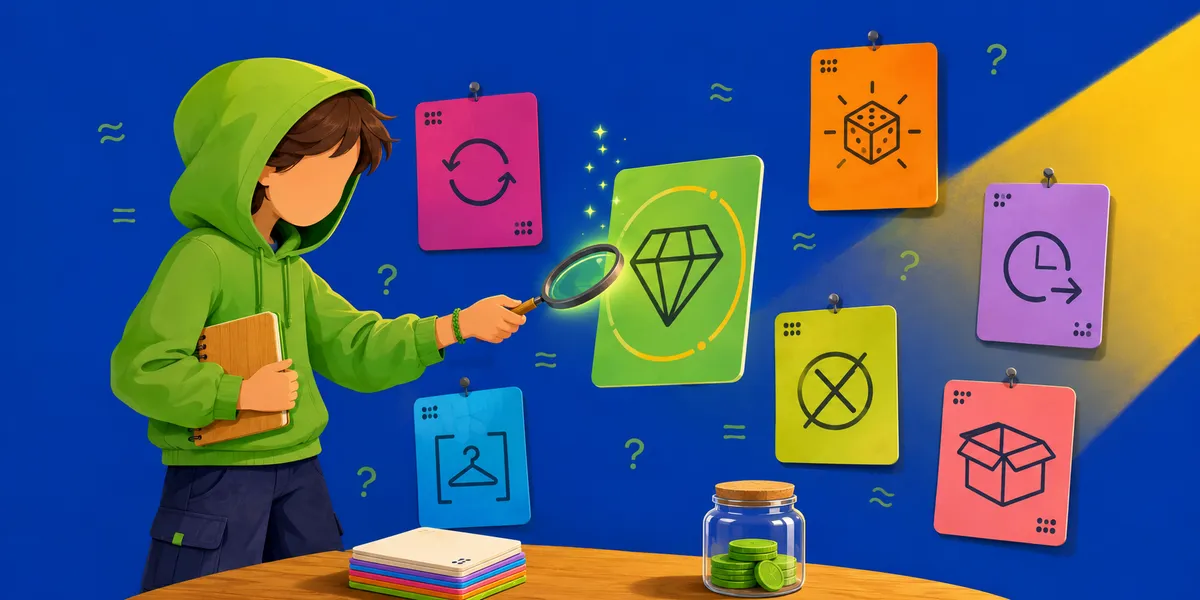
The seven shapes below are the working typology. Each one is a different way the same business model (small + frequent + optional + in-game) shows up. The widget further down quizzes all seven; the prose here is the cheat sheet.
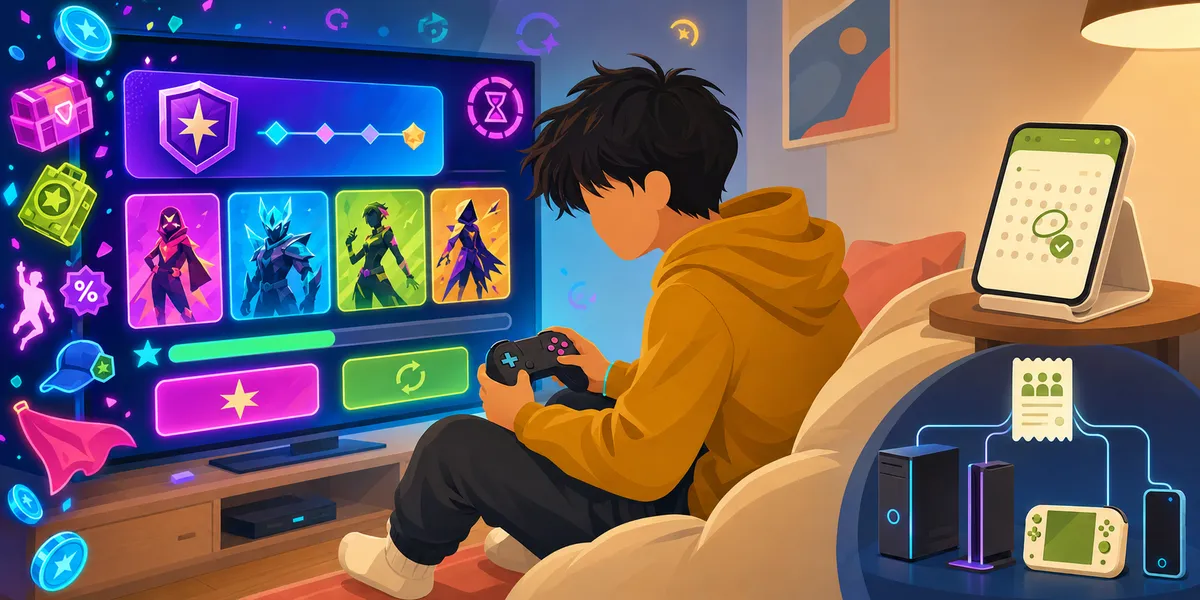
- Currency packs. The classic. You buy Robux, V-Bucks, gems, or some other in-game currency in a small denomination, then spend it later on items the game offers.
- Battle Passes. A recurring seasonal pass that unlocks cosmetics as you play. Looks like a subscription; behaves like a microtransaction at the per-season level.
- Direct cosmetic purchases. You pay $1.99 once for a single skin or emote. No currency in between.
- Gacha pulls / loot boxes. You pay a small amount for a random reward. The randomness is the issue; the design is closer to gambling than to commerce.
- Time-skips and energy packs. The game makes you wait, then sells you the removal of the wait. The friction is manufactured; the purchase is the relief from it.
- Ad-removal upgrades. A free-with-ads app sells silence for $2.99 once. The fairest shape on the list; still counts.
- Edge-case DLC. A bigger one-time download for $20 or $30. Not really a microtransaction; included on the list because the boundary matters for the typology.
The Common Sense Media in-app purchases guide and the AAP's statement on digital advertising to children both arrive at a similar conclusion from different angles: the design of in-game stores is not accidental, and recognition is the precondition for any other response the family wants to have. The point of the seven shapes is to give your kid (and you) the language to use the design intentionally rather than be used by it.
Microtransaction is an industry word for what your kid already feels: the game is free, except for the parts that aren't, and those parts are the parts that matter to a nine-year-old.
Try it: classify these seven examples
The widget below runs the seven shapes as a short classification exercise. For each example, you and your kid pick one of three answers (Microtransaction / Sort of / Not really); the verdict reveals with a short explanation. Wrong answers are not penalized; the verdict-reveal teaches regardless of which button you pick. The point is not to score the round; the point is for the seven shapes to become familiar enough that the next time you see one in the wild, the name lands first and the pull lands second.
★ Interactive · 90 seconds
Spot the microtransaction
Round 1 of 7
Is this a microtransaction?
A Robux pack in Roblox
Free-to-play kid game platform
You buy a small amount of in-game currency that you spend later on cosmetics, avatar items, or other Roblox creators’ games.
A nine-year-old can usually run this exercise alongside a parent at the kitchen table in about three minutes. A teen can run it solo. Either way the kid finishes knowing seven names for what was previously one fuzzy feeling, which is roughly the entire point of literacy work on this topic.
How to explain it to a kid at 8, 12, and 15
Three scripts that work at three ages. None of them is the whole conversation; each is the opening move that makes the rest of the conversation possible.
At eight, the candy-aisle analogy. "Some games are like a free playground with a candy aisle inside it. You can play without buying anything, but the playground keeps walking you past the candy. A microtransaction is just buying candy at the in-game candy aisle. It is not bad to buy candy. It is good to know the candy is being shown to you on purpose." An eight-year-old can hold this picture. The name comes later; the picture lasts.
At twelve, the basic-vs-paid split. "The version of the game you got for free is the basic version. The store inside the game sells you the parts that make you feel further ahead than the basic version: a better skin, a faster wait, a rarer character. The game was designed so the free version still works, and the store version feels a little better. Both are real, on purpose." A twelve-year-old can see the design choice once you name it, which is the literacy move that pays off for the next several years.
At fifteen, the dark-pattern frame. "The in-game store is not neutral. The order of the buttons, the size of the price, the countdown rings, the way the currency obscures the dollar cost: all of those are tuned choices. The Federal Trade Commission fined Epic Games $245 million in 2022 specifically for using these patterns on kids; the design family is the same in most other in-game stores. The literacy is not 'avoid these stores forever'; it is 'recognize the design and then decide.'" A teen who has heard this once will spot it in the next store they open without your help.
Lessons that practice this in the app
Three lessons that build the recognition habit without naming any specific game. Try them in the demo to see how they appear on the kid's account.
The ad-spotting lesson is the youngest entry point and the most directly transferable; once the kid can spot a "pay attention to me" cue in an ad, they spot it in the in-game store too. The subscription lesson handles the Battle Pass shape (recurring purchases that renew quietly). The in-app-purchase choice game uses a small-scale simulation to practice the recognition without real money on the line, which is exactly the kind of low-stakes rehearsal that lands at this age.
When the literacy lands, the tactics follow
The literacy work of this post does not, by itself, set a monthly spending cap or write a 24-hour-wait rule. Those are tactical decisions, and they are the right next step once the kid can name the shapes. The companion posts cover the spending side directly: the Roblox spending playbook handles the impulse-pack version of in-game stores, and the V-Bucks budget playbook handles the recurring-Battle-Pass version. If you also want the broader research backbone that frames why this category exists in the first place, the financial literacy guide has the source set, and the compound interest explainer is the other concept-shaped post at the same financial-literacy guide.
The general sequencing we recommend is: read this post once with your kid (or alone before you talk to them), run the spotter exercise, and then pick the sibling that matches whichever game is causing the current friction. The kid who has done the seven-shapes exercise will sit through the spending-rules conversation more usefully than the kid who has only heard the rules. The order matters; literacy first, then tactics.