In this guide
★ Key takeaways
- How to explain debt to kids, in one sentence: debt is money you borrow and have to pay back, usually more than you took.
- Match it to the age. At six it is borrow-and-give-it-back, at ten it is borrowing-has-a-cost, at fifteen it is good debt, bad debt, and how unpaid balances snowball.
- Not all debt is bad. Some borrowing builds something that lasts, and some just costs. The difference is what you get for the fee you pay.
- Kids do not need real debt to learn this. Saving for something instead of borrowing for it is the same habit, and it is completely practiceable now with no money at risk.
How to explain debt to kids starts with one honest sentence: debt is money you borrow and have to pay back, usually a little more than you took. That is the whole idea, and you can deliver it to a six-year-old without a single number. Most parents tense up at this topic because it feels like it needs a finance lecture, and it really does not. A young kid needs a borrowing story. A teenager needs to see what borrowing actually costs. You can give both without ever handing them a loan.
This is the borrowing chapter of the broader teaching-kids-about-money-by-age guide: what to say at each age, how to tell good debt from bad, and a side-by-side tool that turns "borrowing costs more" from a warning into a number your kid can watch move.
The short answer: what debt actually is
Four things make debt make sense to a kid, in this order:
- It is borrowed. Someone else's money, handed to you for now.
- It has to go back. Borrowing is a promise, not a gift.
- It usually costs extra. You often pay back a bit more than you took, and that extra is the price of borrowing.
- The longer you owe, the more it costs. Drag the payback out and the extra keeps growing.
Debt is a promise to pay back
Borrowed money still belongs to someone else
Save first and owe nothing
Patience is the price, not interest
Kids grasp the first two points early, because they have already borrowed a toy and given it back. The part that takes longer to land is points three and four, the idea that time itself adds to the bill. That is also where adults get into trouble, so it is worth teaching young. The Consumer Financial Protection Bureau's Money As You Grow milestones put borrowing and paying it back among the core money skills kids build through the school-age years, right alongside saving and spending.
Debt isn't extra money. It's tomorrow's money, spent today, with a fee for being early.
How to explain debt by age
You usually do not pick the moment to talk about debt. Your kid does, when they want a dollar they do not have, or when they hear an older cousin complain about a loan. So it helps to have a version ready for whatever age they are standing in front of you.
Ages 6 to 8: borrow and give it back
Lend them a dollar for the gumball machine and have them pay it back from the next allowance. The whole lesson at this age is that borrowed money belongs to someone else.
Ages 9 to 12: borrowing has a cost
Now add the catch. Pay it back late, or a little at a time, and it ends up costing more than you borrowed. That extra is the price of using money that was not yours yet.
Ages 13 to 16: good debt, bad debt, and the snowball
The grown-up version. Some debt builds something that lasts, like a degree or a first car. Some just costs, like a payday loan. And unpaid balances snowball as interest piles on interest.
At six to eight, keep it borrow-and-give-it-back. Lend them a dollar for something at the store and have them pay it back from the next allowance. That is the entire concept at this age. Skip interest, skip the word "debt" if you want, and just land the promise: borrowed money belongs to someone else, so it has to go back. The kite-festival story below teaches exactly this beat.
At nine to twelve, add the cost. Now they can hold two ideas at once, that the fun happens now and the bill comes later, so this is the age to introduce the catch. Pay it back slowly and you pay back more than you borrowed. A good way in is a small advance against allowance with a tiny "thank-you" added on top, so they feel the extra without it stinging. This is also a natural moment for the card version of the same story, which the post on how to explain credit cards to kids walks through.
At thirteen to sixteen, use the real words. This is where accuracy matters, because a wrong term costs more trust than no term. A few worth getting right:
- Interest is the fee for borrowing, charged over time on what you still owe. It is the borrowing twin of the savings interest they might already earn, just pointed the other way.
- Good debt buys something that outlasts the loan and helps them earn or save more later, like a degree or a dependable first car.
- Bad debt charges a lot for something that is gone fast, like a high-fee loan for a night out.
- The snowball is what happens to unpaid balances. Interest gets charged on interest, so a small debt left alone grows on its own.
- Buy Now, Pay Later splits a price into easy payments, which feels free but is still real debt with a real deadline.
Good debt vs bad debt
Plenty of parents tell us this is the part they are least sure how to explain, and it is a fair worry, because the honest answer is not "all debt is bad." Some of the most useful financial moves an adult makes involve borrowing on purpose. So here is the version that holds up.
Good debt buys something that is still worth having once the loan is paid off, and ideally something that helps you earn or save more because you have it. A degree, a reliable car that gets someone to work, a home. Bad debt charges a high fee for something that is already gone by the time the bill arrives. A payday-style loan for concert tickets, a maxed-out balance on takeout and games. The test a kid can actually use: when the borrowing is finally paid back, what do you still have to show for it?
That test does the heavy lifting, because it moves the question away from "is borrowing allowed" and onto "is this worth the fee." A teenager who can ask that one question before they borrow is already ahead of a lot of grown-ups. For the longer arc of how this skill keeps developing, the financial literacy guide covers what comes after.
Borrow now or save first
The cleanest way to make the cost of borrowing real is to stop describing it and let your kid move the numbers. Pick something they actually want, set how much they could put aside each week, and watch the two paths split apart.
★ Interactive · 30 seconds
Borrow it now, or save first?
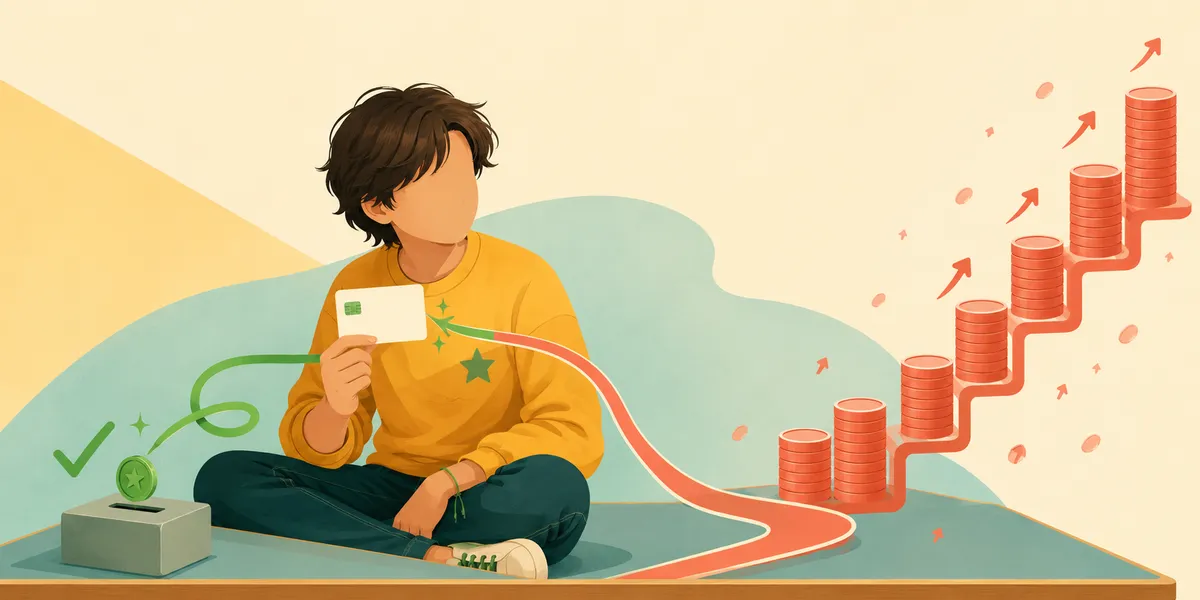
Slide it to your kid's real world. A $80 game with $10 a week saved is gone in about two months with nothing extra to pay. Borrow the same $80 with a weekly fee and the price creeps up while they spend weeks owing money they have already spent. Push the fee higher, the way a real high-cost loan does, and the gap turns into the snowball: the CFPB's youth-education materials on understanding minimum payments land on the same core idea, that paying a debt back slowly is exactly what makes it expensive. Saving inside the Sprout Saver child app practices the left lane on purpose, so the right lane stays a hypothetical.
The questions kids ask first
Once a kid understands that borrowing has to be paid back, the same handful of questions come up almost every time. A short, honest answer beats getting caught off guard.
"Why can't I just borrow it and pay it back forever?" Because the fee keeps running the whole time you owe. Forever is the most expensive way to borrow, not the cheapest. The faster it goes back, the less it costs, which is why "pay it off" is the rule that never changes.
"Is borrowing always bad?" No. Grown-ups borrow on purpose all the time for big things that last, and pay it back carefully. The danger is not the borrowing itself. It is borrowing for things that are gone before the bill is, or borrowing without a clear plan to pay it back.
"What happens if you just don't pay it back?" It gets worse, not better. The amount owed grows, the lender stops trusting you, and for adults it can quietly follow you for years through a credit record that future lenders check. Skipping the bill never makes the debt disappear. It just becomes the snowball with no one left to slow it down.
How to practice saving before there's debt
You would not hand a nine-year-old a loan, and you do not need to. The habit that keeps debt small later, which is saving for something instead of borrowing for it, is completely practiceable now with no money at risk. Saving toward a named Goal is the direct alternative to borrowing. A Vault that locks money for a chosen number of days builds the patience that makes waiting feel normal. And a spending cooldown is the pause that stops an impulse buy from becoming a reason to borrow in the first place.
The four lessons below teach the borrowing concepts directly, from the first borrow-and-return story up to the hidden debt inside Buy Now, Pay Later. Pick the one that matches where your kid is.
When those click and your kid reaches for the Save jar before the borrow lane, they are ready for the real conversations, and eventually for borrowing on purpose, carefully, the way it is meant to work.